





A few months ago, I acquired several AI accelerators – Habana Labs Goya, the first...
Read More



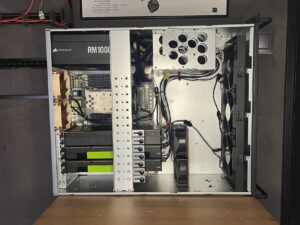
Building the Perfect AI Cluster: A Chassis Challenge
Recently, I was diving into a project focused on building a custom AI cluster, which...
Read More

Is Governance in OT Necessary? InfraSec 2025
? It’s March, and the excitement from the 9th edition of #InfraSECForum2025 ?️ has settled,...
Read More

Intel Xeon PHI 7220p – Forgotten Accelerator
A Journey Through Exotic Systems and Hardware It’s no secret that I enjoy exploring exotic...
Read More- Attackers Hijack Dahua IP Cameras in Ukraine Using P2P Access and Auth Weaknesses

The Computer Emergency Response Team of Ukraine (CERT-UA) has issued an alert warning of unauthorized remote access to video surveillance systems manufactured by Dahua. "Cases of compromising IP cameras and DVRs with access to the video stream, changing the device configuration and creating third-party accounts have been recorded," the State Special Communications Service of Ukraine (SSSCIP)
- CISA Confirms Active Exploitation of Two PHP2Shell Flaws Enabling Remote Code Execution

The U.S. Cybersecurity and Infrastructure Security Agency (CISA) on Monday confirmed active exploitation of the recently patched PHP2Shell flaws by adding them to its Known Exploited Vulnerabilities (KEV) catalog. The PHP vulnerabilities, both rated 9.2 on the CVSS scoring system, facilitate unauthenticated remote code execution on affected deployments - CVE-2026-109618 - An out-of-memory
- Hackers Infect 953 Online Stores With Scanner-Evading JavaScript, Mostly on Magento

An unknown threat actor has infected 953 online stores, most of them running Magento, as part of a long-running campaign active since July 2025. According to Dutch e-commerce security company Sansec, the activity is designed to add a small piece of code to the store's pages that, when visited by unsuspecting users, serves malicious JavaScript loader code through Magento CMS blocks. "When you
- PHP Issues Second Windows Security Update in Five Days to Fix Brotli Code Execution Flaw

PHP has rebuilt its official Windows packages for PHP 8.2 through 8.5 to fix CVE-2026-111497, a flaw in the Brotli compression library that the packages include. The flaw can let an attacker corrupt memory and potentially run code. PHP says the flaw can be reached through the cURL extension when the extension decompresses HTTP responses automatically. cURL leaves that off by default, but
- Attackers Use Microsoft Teams IT Support Scams to Deploy Malware and Ransomware

Cybersecurity researchers are calling attention to what they say is a "recurring social engineering pattern" across hundreds of cases in which threat actors use Microsoft Teams' external chat creation feature to conduct impersonation scams or to deliver malware. "A consistent pattern of attacker behavior has emerged across these incidents: the use of the same throwaway tenants, the same 'IT
- ⚡ Weekly Recap: This2Shell, That2Shell, Everything's an RCE? Rogue AI, Supply Chain Chaos and More

This2Shell, That2Shell, Everything2Shell. That's pretty much how the last week went. Critical bugs that let attackers run code remotely are showing up everywhere. Hackers are scanning for targets, some flaws are already being used in attacks, and security teams have more urgent patches than they can keep up with. And that's not even the full story. A leaked key led to a software supply-chain